
Health
Family involvement in patient care reduces mental health hospitalizations
A new study indicates that an approach prioritizing patient needs, consistent clinicians, and involving close family members cuts mental health admissions.
Published 26 Aug, 23:07 · Pearl Hundred newsroom
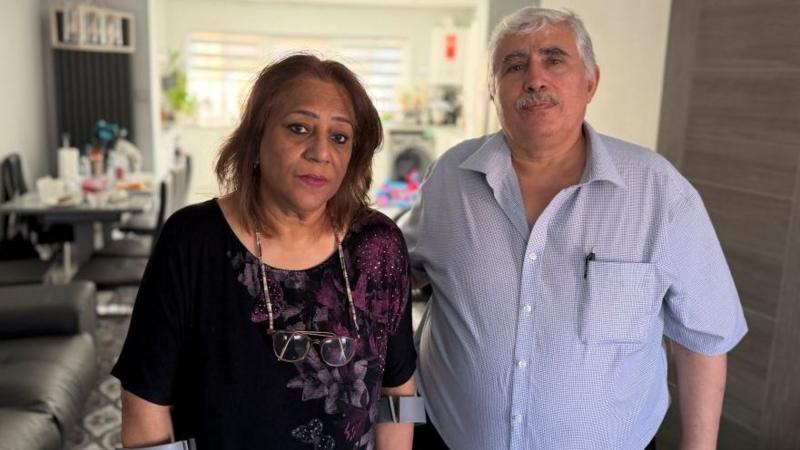
A new study indicates that mental health patients are admitted to hospitals less frequently when their families are included in their treatment.
Dr. Nihad Fathi attributed his recovery to this therapy, which involved his wife, Farah.
Farah and Nihad Fathi are pictured together in their residence. Farah has shoulder-length brown hair and is dressed in a black top adorned with a purple floral design. Nihad, sporting short grey hair and a moustache, is wearing a blue checked shirt with an open collar.
Research has demonstrated that incorporating a patient's family and friends into a fresh mental health treatment methodology reduces the likelihood of psychiatric hospitalisation by a factor of three.
The study, published in The Lancet Psychiatry, additionally revealed that patients reported higher satisfaction with their recovery and overall quality of life compared to those receiving conventional care.
This marks the inaugural comprehensive investigation into Open Dialogue, a therapeutic framework and organisational model for mental health services that prioritises patient needs, ensures consistent clinical care, and engages the patient's close associates.
However, the trial, conducted across five NHS trust regions, discovered that it did not prevent patients from experiencing relapses, leading some critics to argue for more extensive research into its efficacy.
Dr. Nihad Fathi experienced the benefits of this approach after his life began to unravel in 2020, as the Covid pandemic started to take hold.
By the following summer, workplace difficulties had left him feeling anxious, depressed, and without self-worth, believing he was failing his clients.
He described feeling utterly disoriented, like a lost child, and confused about his own mental state.
His wife, Farah, found that period extremely distressing, stating she felt completely unsure of how to act at that time.
During one of his sessions, Nihad and Farah are seated in a circle at their east London residence alongside two clinicians: consultant psychiatrist Dr. Bill Travers and community psychiatric nurse David Adebayo.
These clinicians have been supporting Nihad for five years, and their employer, North East London NHS Foundation Trust, has been implementing Open Dialogue for some of its community patients since 2019.
Open Dialogue originated in Finland during the 1980s and is now employed in over 20 nations globally, although studies on its effectiveness have been somewhat limited.
The fundamental concept involves patients regularly participating in “network meetings.” Besides two Open Dialogue practitioners, these gatherings also include the patient's friends, family, neighbours, or colleagues, who then continue to be involved in the patient's recovery process.
Under the Open Dialogue framework, individuals consistently see the same clinicians, and their personal priorities are given central importance.
These meetings foster open communication about the patient's emotions, their desired support, and how that support can be realised. They also enable the "network" to share their observations about the patient and their own feelings.
Dr. Travers noted that while the network meetings are longer than standard appointments, patients require fewer of them in total.
Written and edited by the Pearl Hundred newsroom.