
Uganda
Tooro King Oyo Nyimba Kabamba Iguru Rukidi IV mourned by cultural leaders
Following the passing of Tooro King Oyo Nyimba Kabamba Iguru Rukidi IV, condolences have been shared by prominent cultural figures, including the Kyabazinga of Busoga, the King of Alur, and the Omusinga of Rwenzururu.
Published 30 Aug, 05:00 · Pearl Hundred newsroom
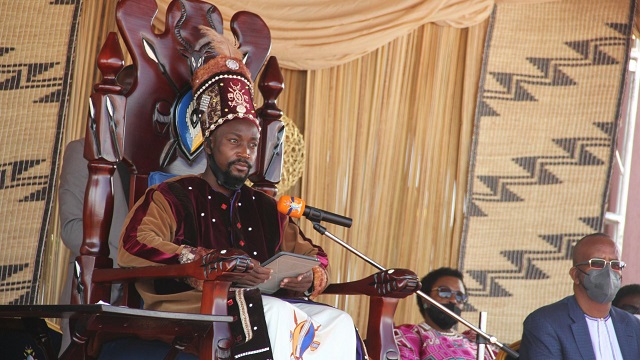
News of the passing of King Oyo Nyimba Kabamba Iguru Rukidi IV of Tooro has led to an outpouring of sympathy from prominent cultural leaders. Among those expressing condolences are William Wilberforce Gabula Nadiope IV, the Kyabazinga of Busoga; Philip Olarker Rauni III, the King of Alur; and Charles Wesley Mumbere, the Omusinga of Rwenzururu, all of whom have paid tribute to the departed monarch.
The death of King Oyo, announced on Thursday evening, sparked widespread sorrow among the royal family, his subjects, and cultural institutions throughout Uganda. In separate messages of sympathy, the cultural figures characterized King Oyo as a forward-thinking, humble, and committed ruler, whose contributions to preserving culture and heritage would serve as inspiration for future generations.
William Wilberforce Gabula Nadiope IV, the Kyabazinga of Busoga, stated that Uganda had lost a significant cultural figure whose influence would extend far beyond his lifetime. Gabula remarked that in King Oyo, Uganda had lost an important voice and a distinguished cultural leader whose impact would be felt for many generations. He commended King Oyo for his humility and dedicated leadership, noting that his service to Tooro and his efforts to maintain its cultural legacy had created an enduring impact.
Philip Olarker Rauni III, the King of Alur, also conveyed his sympathies through his Prime Minister, Lawrence Opar Angala, describing the monarch's death as a profound loss to the community of traditional leaders. Rauni highlighted the strong historical and cultural connections between the Alur and Tooro kingdoms, indicating that King Oyo had shared a special bond with the Alur royal institution.
He honored King Oyo’s contributions to cultural preservation and his efforts to promote the importance of traditional leadership. Charles Wesley Mumbere, the Omusinga of Rwenzururu, similarly joined in the mourning, offering his condolences to the Tooro royal family, the people of Tooro, and everyone affected by the King's death. In a condolence message delivered by the Rwenzururu Kingdom Prime Minister, Baritazale Kule Benson, Mumbere affirmed that the Obusinga Bwa Rwenzururu stood in solidarity with the Tooro royal family during their difficult time. He remembered King Oyo as a leader whose devotion to his people, culture, and heritage would be cherished for generations.
Mumbere articulated that King Oyo’s demise represented a profound loss for traditional leadership across the Rwenzori region, Uganda, and the broader community of customary institutions. He emphasized that the late King remained dedicated to upholding cultural values and advancing the prestige and relevance of traditional authority. The messages from these three cultural bodies also drew attention to the intricate historical relationship between the Tooro and Rwenzururu cultural institutions.
Historically, the Bakonzo and Bamba/Babwisi communities were loyal to the Tooro Kingdom until March 1962, when their representatives, led by Isaya Mukirania, who was King Mumbere’s father, departed from the Rukurato. They cited what they perceived as oppression by the Batooro people. Mukirania was joined by other notable figures, including Yeremia Kawamara, the father of Bwamba King Martin Kamya, and the late Peter Mupalya.
Following this, they declared their independence on June 30, 1962, and initiated the armed Rwenzururu Movement against Tooro, which subsequently formed the foundation for the current Obusinga Bwa Rwenzururu. Despite these historical tensions, Mumbere’s message stressed their shared grief and the significance of cultural institutions uniting in mourning.
King Oyo’s death also marks the conclusion of a reign that began when he was merely three years old. He ascended to the Tooro throne on September 12, 1995, following the death of his father, King Patrick Matthew Kaboyo Olimi VII, who passed away in August 1995 at the age of 49. As he was a minor, Oyo was placed under the guardianship of several prominent individuals, including President Yoweri Museveni, his mother Queen Mother Best Kemigisa, his aunt Princess Elizabeth Bagaya, and Ronald Mwenda Mutebi II, who was then the Kabaka of Buganda.
The Tooro Kingdom Supreme Council, known as the Orukurato, also appointed Prof. Oswald Ndolelire, Zaverio Byabagambi, and Isaaya Kalya to serve as regents, providing counsel and guidance to the young monarch. In 2010, King Oyo reached the age of 18 and fully assumed control of the kingdom. The Kyabazinga, the Alur King, and the Omusinga of Rwenzururu have all reiterated their solidarity with the Tooro royal family and its people as the kingdom begins its period of mourning and prepares for the burial of its ruler.
Your email address will not be published. Required fields are marked *
Edited by the Pearl Hundred newsroom. Reporting and photography credited to The Independent Uganda. View the original report.