
Health
Trial vaccine prevents cancer recurrence in patients
A new injection successfully prolonged the period patients remained free of cancer, though the exact duration is yet to be determined.
Published 20 Aug, 08:10 · Pearl Hundred newsroom
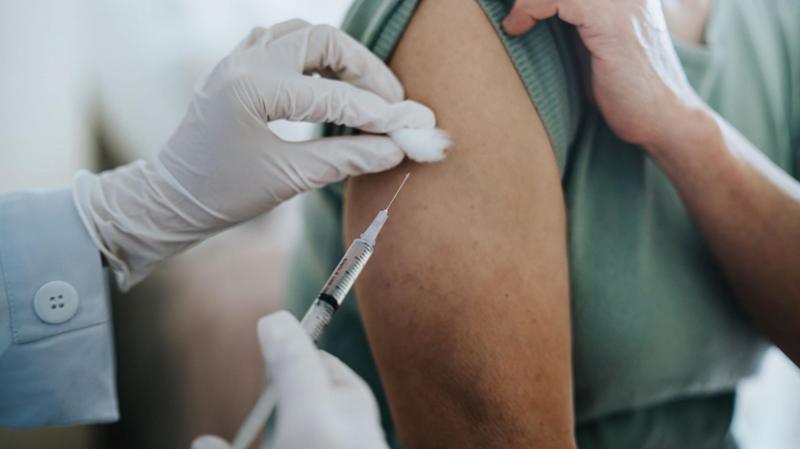
A healthcare worker, wearing white gloves, is shown in a close-up image, holding a syringe and cotton swab while delivering an injection into an individual's upper arm during a vaccination session.
A new, tailored vaccine, administered alongside an existing medication, has successfully prevented the recurrence of skin cancer in trial participants, marking what could be a significant turning point in oncology.
This vaccine, a collaborative effort between pharmaceutical firms Merck & Co (also known as MSD) and Moderna, was given to patients who had undergone surgery for high-risk melanoma, a severe form of skin cancer.
Initial findings released by the two companies indicate that this novel injection extended the period during which patients remained free of cancer, although the precise duration is not yet specified.
Oncology specialists describe this development as a breakthrough, yet they advise caution, noting that the complete trial data has not yet been made public or undergone independent verification by expert peer review.
Furthermore, even after the conclusion of the trial phases, the treatment would still require regulatory approval and an additional clearance process before it could be offered through the NHS.
Named Intismeran, the vaccine was administered in conjunction with Keytruda, an immunotherapy drug already in use for cancer treatment.
The companies reported that combining the drug and vaccine substantially prolonged the cancer-free interval for patients and decreased the likelihood of the disease spreading to other organs, when compared to taking Keytruda alone.
The phase three clinical trial included over a thousand individuals diagnosed with high-risk melanoma, specifically stages two, three, or four, meaning their cancers ranged from large localized tumors to those that had metastasized throughout the body.
Professor Peter Johnson, who serves as the National Clinical Director for Cancer at NHS England, expressed his enthusiasm for this development during an interview on the BBC's Today Programme.
He explained that previous cancer immune therapies focused on broadly activating the immune system to detect cancer, whereas this new approach offers a highly specific way to direct the immune response.
Professor Johnson commented that this appears to be a very significant advancement and mentioned that the NHS is making preparations to make this kind of treatment available to patients.
Merck (known as MSD in European markets) and Moderna are classifying this as a personalized vaccine because it is designed to target the specific tumor of an individual patient.
To create this innovative injection, scientists utilized mRNA technology, similar to that employed in some Covid-19 vaccines, to identify specific mutations in cancer cells by first surgically removing a small tumor sample from a patient and then analyzing its DNA sequence.
The outcome is a customized anti-cancer injection, uniquely formulated for the patient's tumor, which instructs the immune system to detect and eradicate any lingering cancer cells.
Both companies are also investigating similar personalized vaccine approaches for other cancers, including those affecting the lung, bladder, and kidneys.
Stephane Bancel, Moderna's chief executive, stated that these findings signify a crucial moment in the ongoing research into cancer.
Cancer specialists have also lauded the news as positive, but they are keen to stress that the research results are still in their preliminary stages.
Written and edited by the Pearl Hundred newsroom.