
Uganda
Public Service Commission misses deadline for District Commissions
The Public Service Commission has acknowledged that it will not meet the August 30 deadline set by the Local Government Minister to establish functional service commissions in all districts and cities.
Published 29 Aug, 11:00 · Pearl Hundred newsroom
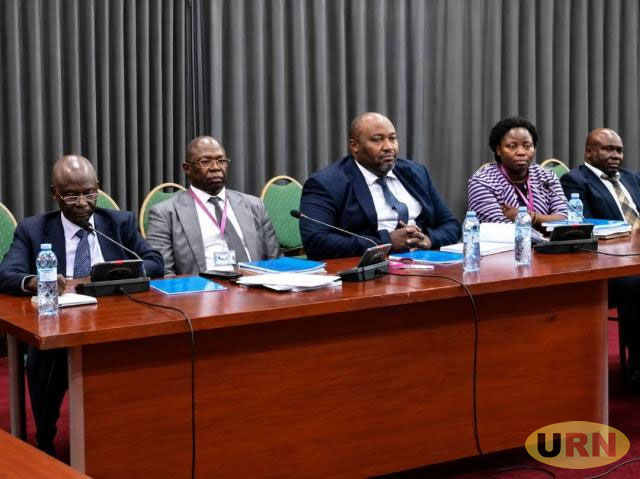
The Public Service Commission (PSC) in Kampala, Uganda, has acknowledged that it will be unable to meet the August 30 deadline imposed by Local Government Minister Balaam Barugahara for all districts and cities lacking operational service commissions to establish them.
This concession was made on Friday when the Public Service Commission appeared before the Committee on Commissions, Statutory Authorities and State Enterprises (COSASE) to address concerns detailed in the Auditor General’s report for the 2024/2025 financial year.
Elgon North MP Gerald Nangoli introduced the issue before the committee could commence its review of the Auditor General’s findings, noting that several districts had already passed council resolutions and submitted candidates to the Public Service Commission, but were uncertain if these appointments would be approved before the ministerial cutoff.
John Geoffrey Mbabazi, the Permanent Secretary of the Public Service Commission, confirmed that some districts and cities had indeed submitted nominees for endorsement, but explained that the national commission itself was currently unable to act because its members had not been appointed.
Mbabazi informed the Members of Parliament that the terms of all nine members of the Public Service Commission, including its chairperson and deputy, concluded on July 28.
He stated that new names for appointment had been forwarded to President Yoweri Museveni before the previous contracts ended, but the President had not yet confirmed these individuals.
Mbabazi affirmed that some districts and cities had sent their nominees for the Public Service Commission’s approval and that, at present, the commission lacked its full complement of members.
Mbabazi indicated that the commission would integrate the new members and begin reviewing district nominees once the President had made the appointments.
This situation implies that districts and cities with improperly constituted service commissions may continue to be unable to hire, promote, or make other human resources decisions, potentially causing further delays in service provision.
Nangoli also voiced worries about the extended period the Public Service Commission takes to process nominees from local governments, pointing out that some districts wait over six months before their candidates are interviewed and approved.
He requested an explanation from the commission regarding the implications for institutions needing its services while it operates without permanent commissioners, and whether the President had been formally apprised of this critical situation.
Mbabazi responded that the commission had been processing nominees to the best of its ability, but its workload had also been impacted by additional government responsibilities, such as the restructuring of public institutions.
He clarified that all nominees submitted before July had been processed, while those presented after July 28 were still awaiting action.
According to Mbabazi, a panel established by the President had interviewed potential appointees for the Public Service Commission and submitted its recommendations prior to the expiry of the commissioners’ contracts.
However, he noted that the President had not yet formally appointed the new commissioners.
This acknowledgment occurred as COSASE, under the chairmanship of Muwada Nkunyingi, scrutinised the Public Service Commission concerning various financial and management issues highlighted by the Auditor General.
Nkunyingi informed the commission that the committee intended to investigate matters such as asset records, unfinished short-term activities, failure to budget for non-tax revenue, under-utilisation of government warrants, and unspent funds.
The audit concerns included 162 million shillings in unspent warrants, 69.801 million shillings designated for pensions, 42.075 million shillings for gratuity, and 37.345 million shillings in staff salaries, alongside several outputs that were only partially completed.
Written and edited by the Pearl Hundred newsroom.