
Uganda
Uganda Airlines CEO dismisses mass layoffs, projects break-even by 2030
Girma Wake, CEO of Uganda Airlines, stated that no large-scale job cuts are planned. He anticipates the national carrier will achieve profitability by the year 2030.
Published 29 Aug, 05:00 · Pearl Hundred newsroom
The Independent August 29, 2026 Business, NEWS Leave a comment
Kampala, Uganda | URN | Uganda Airlines Chief Executive Officer Girma Wake has ruled out mass dismissals at the national carrier, saying the ongoing restructuring is intended to strengthen the workforce and address critical staffing gaps.
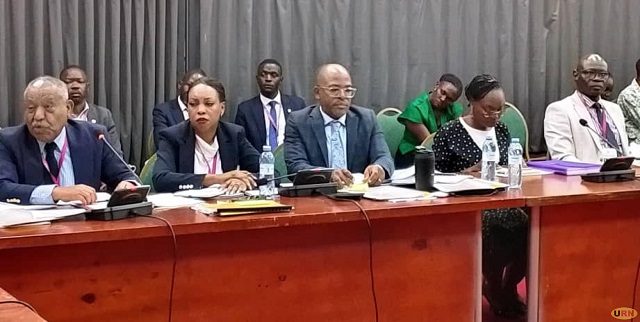
Wake made the remarks while appearing before Parliament’s Committee on Commissions, Statutory Authorities and State Enterprises (COSASE) on Thursday and Friday, as MPs questioned the airline’s human resource structure, recruitment plans and the fate of employees who had been dismissed.
The committee, chaired by Muwada Nkunyingi, was reviewing the Auditor General’s report for the financial year 2024/2025 when MPs raised concerns over reports of staff dismissals and fresh recruitment at the airline.
The Uganda Airlines management team was led by Wake and accompanied by former Chief Executive Officer Jennifer Bamuturaki.
Nkunyingi said the committee had received numerous calls and complaints from individuals alleging unfair dismissals at Uganda Airlines. He asked management to clarify whether employees had been laid off, how many had been affected and whether the required procedures had been followed.
The committee chairperson also questioned the decision to create a new department and recruit additional staff at a time when Uganda Airlines was struggling to meet its revenue targets.
Wake told MPs that most of the complaints before the committee concerned employees who had been dismissed before he assumed leadership of the airline. He said only two or three employees had been dismissed since he took over, and that each case involved violations of company policy.
Wake acknowledged receiving appeals from former employees seeking reinstatement, with some claiming they had been unlawfully terminated. However, he said he could not reopen every dismissal case dating back several years because his immediate responsibility was to improve the airline’s performance.
He said he was willing to examine individual cases where there was a logical basis for the complaints, but ruled out reinstating employees whose records showed serious misconduct. Wake cited cases involving allegations of misappropriation, saying the airline needed to maintain a clean and accountable workforce.
On the proposed new organisational structure, Wake assured the committee that the restructuring would not result in mass layoffs. Instead, he said, the airline would strengthen its existing workforce and recruit additional personnel where critical gaps had been identified.
He defended the planned recruitment despite the airline’s poor financial performance, arguing that some positions were indispensable to the operation of an airline. Wake identified pilots and engineers as critical personnel whose recruitment was necessary to keep aircraft operational and generate revenue.
He also pointed to significant staffing gaps in the commercial division, particularly in sales and marketing, saying Uganda Airlines could not increase its revenues without investing in personnel capable of selling its services in a competitive market.
Wake said the airline was not making enough money partly because it lacked sufficient personnel dedicated to selling its services. His remarks came against the backdrop of concerns raised by the Auditor General over Uganda Airlines’ failure to achieve its approved revenue targets.
According to the committee’s review of the audit implementation report, Uganda Airlines achieved only 68.49 per cent of its overall revenue target in the financial year 2024/2025.
The airline collected 424.2 billion Shillings against an approved revenue budget of 638.4 billion Shillings. Passenger, cargo and charter operations, which constitute the airline’s major revenue streams, all performed below their respective targets.
Wake told MPs that Uganda Airlines would have to incur additional costs in the short term to build the operational and commercial capacity required to become profitable. He cautioned against expectations of an immediate financial turnaround, saying profitability would require sustained investment and a stronger operational base.
Wake projected that Uganda Airlines could break even around 2030 or 2031 if the restructuring and investment programme succeeds. He said the airline could record higher losses during the initial phase of the restructuring, but the losses should gradually decline as its operations and commercial capacity improve.
Written and edited by the Pearl Hundred newsroom.